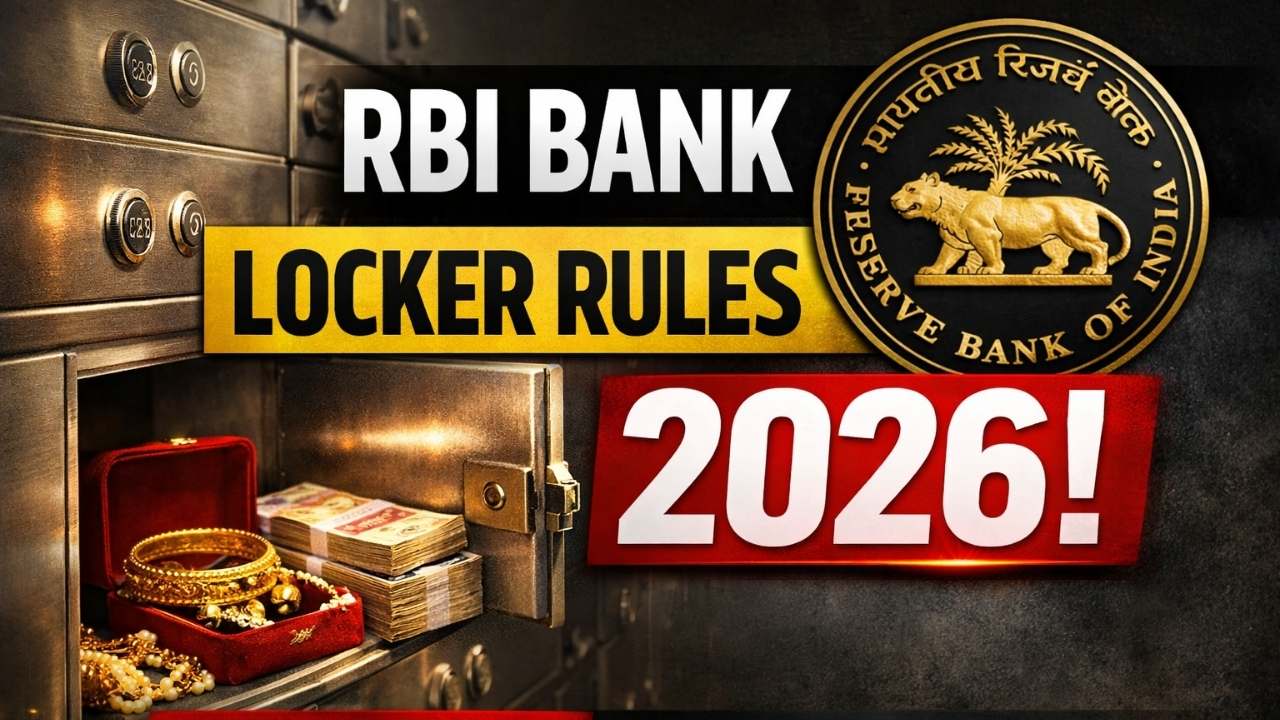
RBI Bank Locker Rules 2026: The rules for bank lockers in India have been strengthened to improve safety and transparency for customers. The RBI introduced updated guidelines to clearly define the responsibilities of banks and locker holders. These rules ensure better security, proper agreements, and fair compensation in case valuables are lost due to bank negligence.
Understanding the RBI bank locker rules is important for anyone using locker facilities in 2026. The regulations explain security systems, liability limits, nominee access, and claim procedures. Knowing these rules helps customers protect their valuables and understand their rights while using locker services in banks.
Mandatory Locker Agreement Rules Under RBI Guidelines
Banks must provide a standardized locker agreement to every customer using locker services. This agreement defines the rights, duties, and responsibilities of both the bank and the locker holder. Customers must sign the revised agreement introduced under RBI guidelines to continue using locker facilities.
The agreement also includes terms related to locker rent, security responsibilities, and procedures in case of loss or damage. Banks must provide a copy of the signed agreement to customers for transparency. Without signing the updated agreement, banks may restrict locker operations or discontinue the service.

Bank Locker Security Requirements and Safety Systems
Banks must maintain strict security systems to protect locker facilities and prevent unauthorized access. Locker rooms are required to have surveillance cameras, alarm systems, secure vault structures, and restricted entry zones to maintain safety.
Access to the locker room is recorded to ensure proper monitoring of visits. Many banks also maintain electronic logs or biometric systems to track entry and exit. These measures help maintain transparency and reduce the risk of theft or unauthorized locker access.
RBI Bank Locker Rules 2026 Overview
| Key Aspect | Details |
| Regulating Authority | Reserve Bank of India |
| Maximum Compensation | Up to 100 times annual locker rent |
| Locker Access System | Dual-key system used by banks |
| Agreement Requirement | Mandatory standardized locker agreement |
| Nominee Access | Nominee allowed after death verification |
| Security Measures | CCTV, alarms, restricted entry zones |
| Claim Settlement Time | Around 15 days after valid claim |
| Liability Conditions | Compensation only in case of bank negligence |
Dual Key System Used in Bank Locker Operations
Most bank lockers operate using a dual-key system designed to ensure higher security. One key remains with the bank while the other is given to the locker holder. Both keys must be used together to open the locker.

This system prevents any single person from accessing the locker independently. Even bank staff cannot open the locker without the customer’s key. The arrangement ensures that customers maintain control over their valuables.
Items That Can Be Stored Inside Bank Lockers
Bank lockers are mainly used to store valuable personal belongings and important documents. Customers usually keep jewellery, property documents, insurance papers, certificates, and family records in lockers for safety.
These items are generally kept in lockers because they require strong security protection. Banks provide a secure vault environment where customers can store such valuables without the risk of damage or theft at home.

Restricted Items Not Allowed Inside Bank Lockers
Certain items are strictly prohibited from being stored inside bank lockers. These include weapons, explosives, illegal drugs, hazardous chemicals, and any dangerous materials that may pose safety risks.
Perishable items or items that may cause damage to locker facilities are also not allowed. If a customer stores prohibited items and it leads to legal issues, the bank has the right to cancel locker services and report the matter to authorities.
RBI Compensation Rules for Locker Loss or Theft
The RBI has clearly defined compensation rules if locker contents are lost due to bank negligence. In such cases, the bank is liable to compensate the customer based on a fixed limit determined by RBI guidelines.

The maximum compensation allowed is up to one hundred times the annual locker rent. For example, if the annual locker rent is ₹3,000, the maximum compensation payable by the bank could reach ₹3,00,000 depending on the circumstances.
Situations Where Banks Are Not Responsible for Loss
Banks are not responsible for losses caused by events beyond their control. Natural disasters such as earthquakes, floods, or other major calamities fall under such situations where the bank may not be liable.
If a loss occurs because of the customer’s negligence, such as losing the locker key or sharing access with others, the bank is also not responsible. Customers are therefore advised to maintain proper safety and consider insurance for highly valuable items.

Rules for Inactive or Unused Bank Lockers
If a bank locker remains unused for a long period, the bank may initiate procedures to verify the status of the locker holder. Banks generally contact the customer to confirm whether the locker is still in use.
If the customer does not respond after repeated notices, the bank may proceed with a controlled locker break-open process. This process must be conducted in the presence of authorized officials and independent witnesses to maintain transparency.
Nominee Access and Claim Settlement Process
RBI guidelines allow locker holders to add nominees to simplify access after the account holder’s death. If a nominee is registered, the bank can provide access to the locker contents after verifying identity and necessary documents.
The claim settlement process is designed to be simple and quick. Banks are expected to process claims and provide locker access within a reasonable time once all required documents and verification steps are completed.