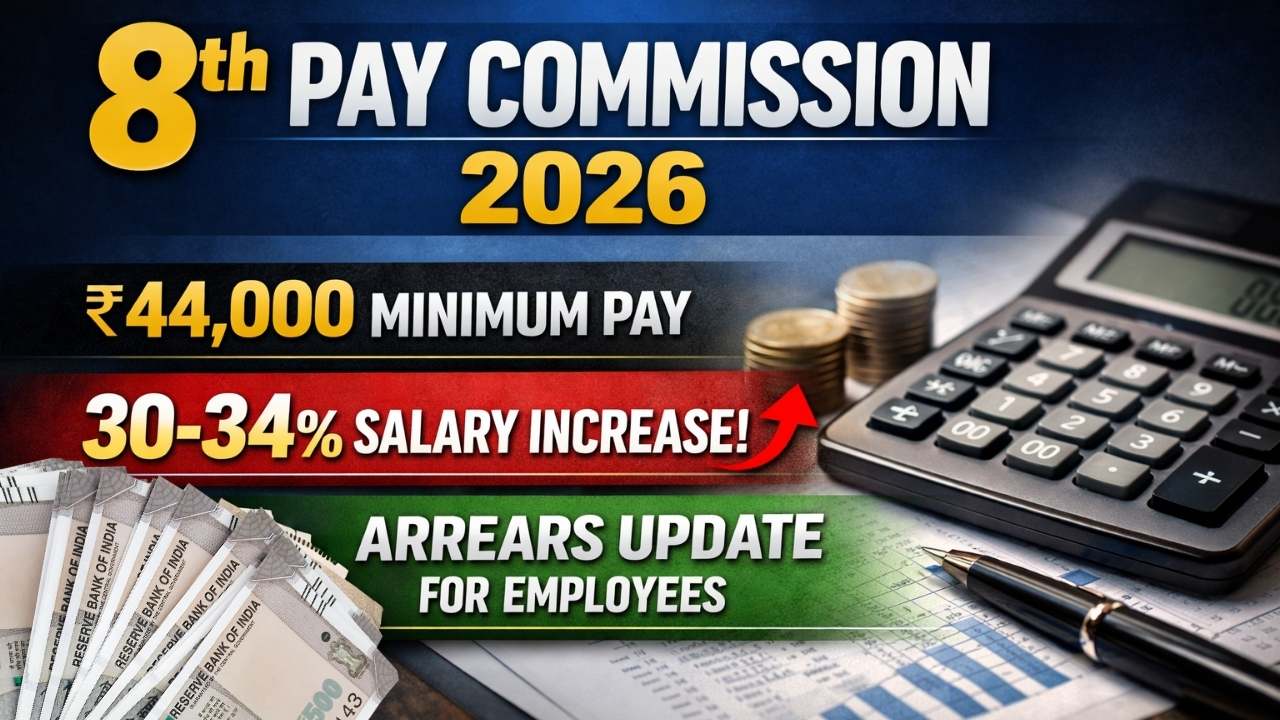
8th Pay Commission 2026: India’s central government employees and pensioners are closely watching developments related to the 8th Pay Commission, which is expected to bring significant changes to salaries, allowances, and pension structures. The commission is set to revise the pay matrix that currently operates under the 7th Pay Commission framework.
As of March 2026, discussions are ongoing regarding salary increases, arrears payments, revised allowances, and pension benefits. While the commission has been formed, the final recommendations are still under preparation. Millions of employees and retirees are waiting to understand how the upcoming reforms may impact their income and retirement benefits.
Latest 8th Pay Commission Update March 2026 For Government Employees
The 8th Pay Commission was approved by the government in late 2025 to review the pay structure of central government employees. This commission is responsible for examining salary structures, allowances, and pension rules to ensure they match current economic conditions and inflation levels.
The panel is expected to take about eighteen months to submit its recommendations. Once the report is finalized and approved by the government, the revised salary structure will be implemented for nearly fifty lakh central government employees and about sixty five lakh pensioners.

Expected Salary Hike And Fitment Factor Under 8th Pay Commission
One of the most important aspects of the 8th Pay Commission is the fitment factor, which determines how much salaries will increase. Early projections suggest that the fitment factor could range between 1.83 and 2.46, although the final number will be decided after detailed analysis.
If the proposed range is applied, the minimum basic salary may increase significantly compared to the current pay matrix. Salary revisions could result in an average increase of around thirty to thirty four percent depending on the employee’s level and the final fitment factor approved by the government.
8th Pay Commission 2026 Overview
| Key Detail | Information |
| Commission Name | 8th Pay Commission |
| Beneficiaries | Around 50 lakh central employees and 65 lakh pensioners |
| Expected Effective Date | 1 January 2026 |
| Estimated Salary Increase | Around 30% to 34% |
| Expected Fitment Factor | 1.83 to 2.46 |
| Arrears Possibility | Yes, if implementation is delayed |
| Report Submission Timeline | Around 18 months after formation |
| Possible Implementation Period | 2027 or early 2028 |
Possible Arrears Payment After Implementation Of New Pay Structure
Arrears are expected if the new pay structure is implemented after the proposed effective date of 1 January 2026. In such cases, employees may receive the difference between the old salary and the revised salary for the delayed period.

Some estimates suggest that employees in lower pay levels may receive arrears ranging from several lakhs depending on their pay level and the approved fitment factor. However, the exact arrears calculation formula has not been officially confirmed yet.
Allowances Revision Expected With New Pay Commission Recommendations
Apart from basic salary changes, several allowances may also be revised under the new pay commission. These allowances play an important role in the total earnings of government employees.
Allowances such as house rent allowance, travel allowance, and medical benefits are expected to be reviewed. These revisions may help employees manage rising living costs and improve overall compensation packages.

Dearness Allowance Adjustment And Pay Matrix Changes
Dearness allowance is an important component of government salaries because it helps offset inflation. When a new pay commission is implemented, the accumulated dearness allowance is usually merged into the revised basic pay.
After the merger, the dearness allowance is reset and future increases begin again based on inflation trends. This adjustment helps create a new salary structure under the updated pay matrix system.
Pension Reforms And Retirement Benefit Changes For Pensioners
Pensioners are also expected to benefit from the 8th Pay Commission recommendations. The revised pay structure will influence how pensions are calculated for retired government employees.

The government may introduce a new pension calculation method linked to the revised pay matrix. This could lead to higher pension amounts and improved retirement benefits for millions of pensioners across the country.
Key Demands Submitted By Government Employee Unions
Employee unions have presented several proposals to the commission during consultation meetings. These demands aim to improve career growth and financial security for government staff.
Some of the major demands include increased promotion opportunities, higher annual increments, and better medical allowances. Certain employee groups have also raised discussions regarding pension reforms and retirement benefits.

Expected Timeline For 8th Pay Commission Report And Implementation
The commission has been given a timeline of about eighteen months to prepare and submit its final recommendations to the government. This process involves reviewing economic data, salary structures, and employee feedback.
If the recommendations are approved after submission, the revised pay structure could be implemented around 2027 or early 2028. Employees would then receive revised salaries along with arrears for the delayed period.
Impact Of 8th Pay Commission On Government Salaries And Economy
The implementation of the 8th Pay Commission could significantly increase the income of millions of government employees. Higher salaries may improve spending capacity and boost household financial stability.
At the same time, the government will need to manage the increased financial burden created by salary and pension revisions. Such pay commission changes often have a broader impact on the national economy and public expenditure.